If this is you
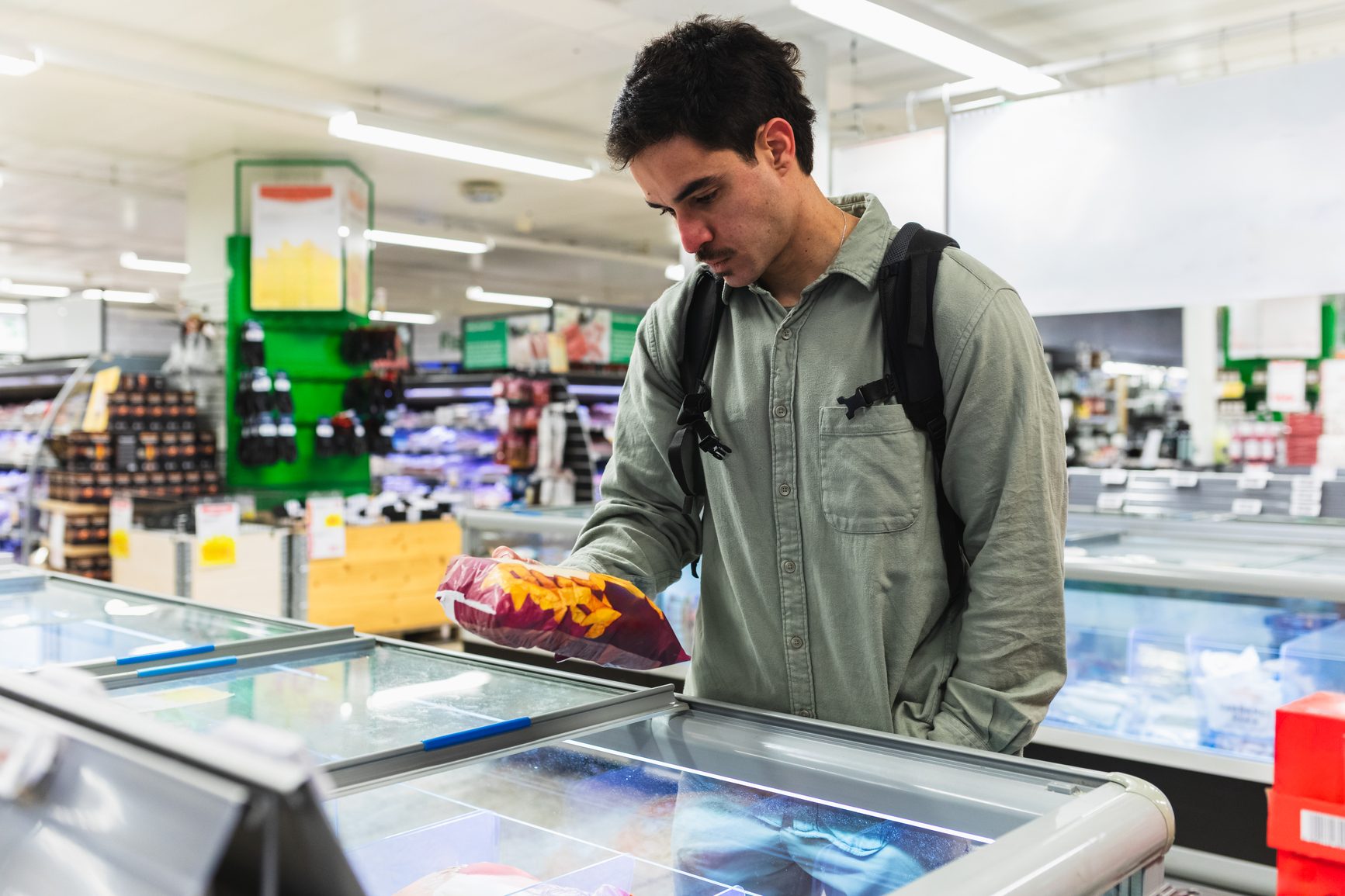
You have been told that food may be driving your EoE. Now you stand in the supermarket reading every label, and each meal feels like a test you might fail.
The short answer
- Most people with EoE react to one to three foods, not to everything. Animal milk and wheat are the most common.
- Allergy skin tests and blood tests cannot reliably tell you which food is yours.
- The way to find out is to remove a food for several weeks, then repeat the endoscopy with samples.
Why would food matter?
In EoE, the lining of the esophagus reacts to certain foods with allergic-type inflammation. This is different from the food allergy most people picture. There are no hives, and nothing happens within minutes.
The reaction builds slowly, over days to weeks. That is why you usually cannot tell which food is the problem from how you feel after a meal.
If bread or steak gets stuck, that does not indicate an allergy to bread or steak. The allergy has been building up for years.
Which foods are the usual triggers?
The same short list comes up again and again:
- animal milk and dairy, the most common trigger
- wheat
- egg
- soy
- less often, nuts, fish and shellfish
The goal is to find the one or two foods that matter, and give you the rest back.
How does an elimination diet work?
It is a test with a beginning and an end:
- You remove one or more foods completely, for at least six to eight weeks.
- The endoscopy is repeated and new samples are taken to see if the inflammation has settled.
- If it has, foods are brought back one at a time, with a check after each, to find the trigger.
- In the long term you avoid only the foods that were proven to cause it.
You do not have to start by removing everything. In a large study of adults, removing animal milk alone worked about as well as removing six food groups. Many doctors now start small and remove more only if needed.
Is diet the only way to treat EoE?
No. Medicines can control EoE without changing what you eat. Diet takes effort and several endoscopies, and it suits some people better than others. Some choose it to avoid long-term medicine. Others prefer medicine and a normal plate.
A dietitian is key to being successful in managing an elimination diet. Food hides in ingredients lists, and a dietitian makes sure you still get what your body needs. This matters most for children, who are still growing.
Don’t wait on this
If food is stuck and will not pass, or you cannot swallow your own saliva, go to an emergency department.
Take these to your next appointment
- Is diet a reasonable first treatment for me, or would you start with medicine?
- Which foods would you remove first, and for how long?
- Can I see a dietitian who knows EoE?
SourcesThe 2025 US guideline on diagnosing and treating EoE
Dellon ES, et al. ACG Clinical Guideline: Diagnosis and Management of Eosinophilic Esophagitis. Am J Gastroenterol. 2025.Trial: removing animal milk alone compared with removing six food groups
Kliewer KL, et al. One-food versus six-food elimination diet therapy for the treatment of eosinophilic oesophagitis: a multicentre, randomised, open-label trial. Lancet Gastroenterol Hepatol. 2023.A practical guide to starting and following a diet for EoE
Chang JW, et al. Development of a Practical Guide to Implement and Monitor Diet Therapy for Eosinophilic Esophagitis. Clin Gastroenterol Hepatol. 2023.Review: which foods to remove, including all animal milks and butter
Lucendo A, et al. Dietary Management of Eosinophilic Esophagitis. Immunol Allergy Clin North Am. 2024.